

Turkey 101: Temps, Brining, and How to Smoke or Grill a Whole Bird
How to buy, thaw, brine, and cook a turkey on the smoker or grill. Whole or spatchcock, the temps that matter, and where to probe.

Turkey gets one big day a year, and most people cook it in the oven out of habit. Put it on the smoker or grill and you free up the oven for the sides, get real smoke flavor, and give the crew a reason to hang out by the fire while it cooks.
Here's my one big take before we start: I'd rather cook two 10 to 12 pound birds than one 20 pounder. Smaller birds cook faster and more evenly, they fit on more grills, and you end up with four drumsticks instead of two.
This is the home base for everything turkey on The Pit. Start here, then jump to a recipe.
TL;DR
Buy about 1.5 pounds of turkey per person. For a larger gathering, go with two smaller birds over one giant one provided your grill has room for both with space for airflow.Thaw it in the fridge, 1 day for every 4 to 5 pounds. Smoke it at 300 to 325°F for your best opportunity for crispy skin. Pull it when the breast hits 160°F and the thighs hit 175 to 180°F, then rest it 30 minutes before carving. Spatchcocking cuts the cook time roughly in half.
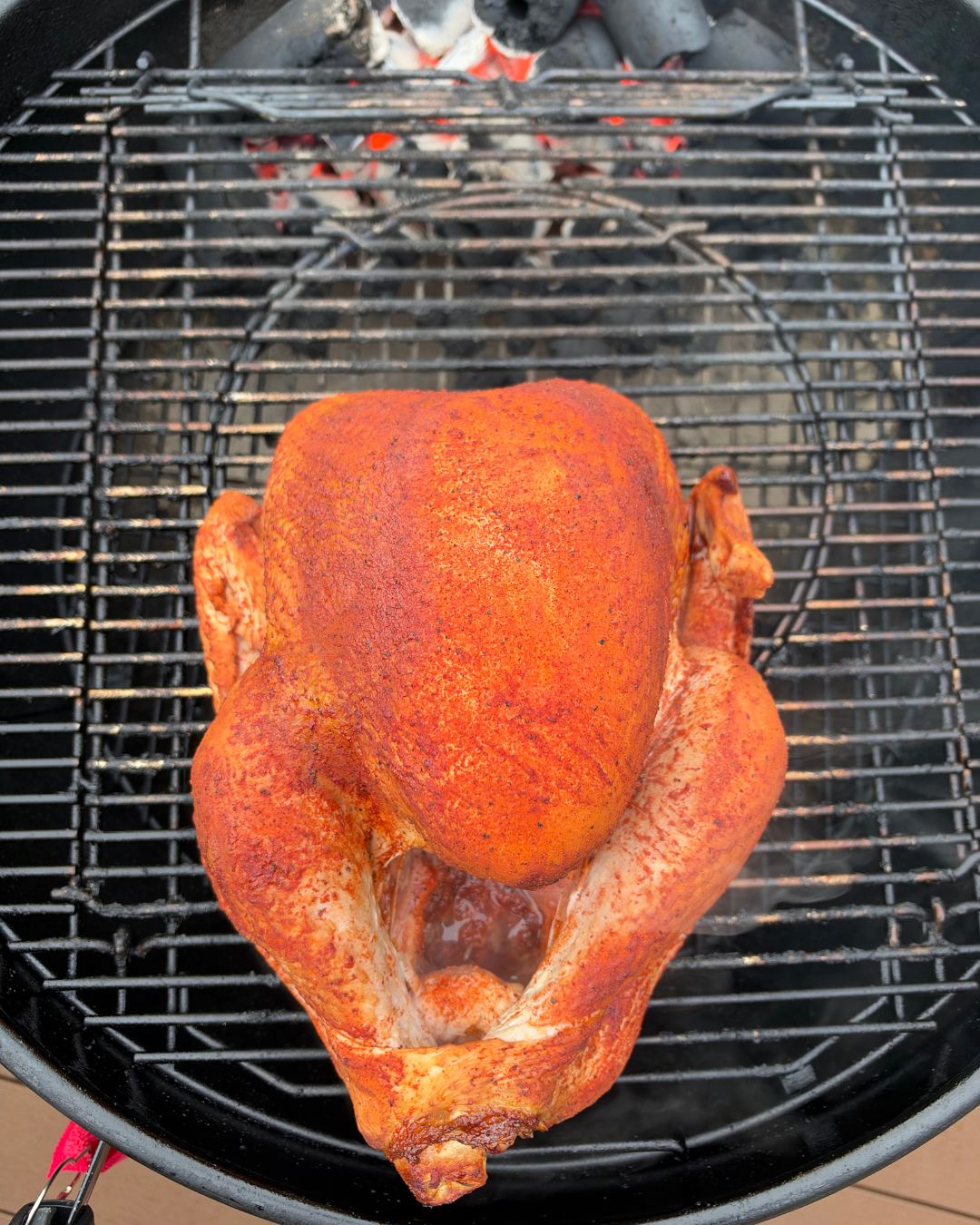
Turkey Recipes
Ready to cook? Jump straight to a recipe. Every turkey recipe we publish lands in this list.
Coming soon:
Spatchcock vs Whole Turkey: We Cooked Both
How to Spatchcock a Turkey
How to Carve a Turkey
How to Buy a Turkey
Walk down the turkey case and you'll usually see three kinds of birds. The label tells you which one you're holding.
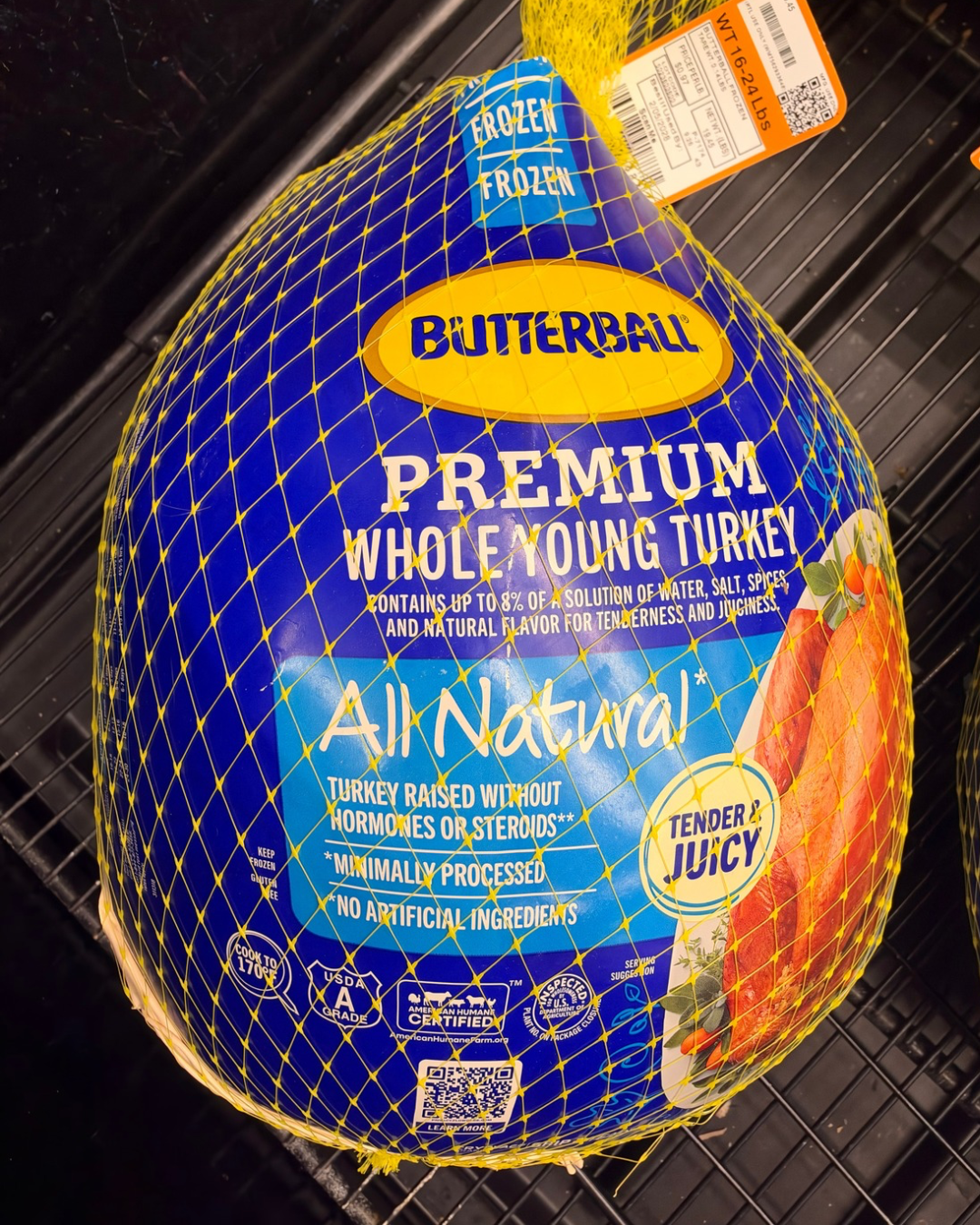
Natural or minimally processed. Just turkey, nothing added. This is the one to buy if you want to brine and season it your way. A turkey labeled natural can still contain an added solution. Try to check the ingredients and solution statement, rather than rely on “natural” or “minimally processed.
Enhanced, basted, or "contains up to X% solution." Injected with salt water and flavorings. They stay juicy, but they're already salty. Don't brine these, and go light on the salt in your rub.
Kosher. Salted during processing. Treat it like an enhanced bird and skip the brine.
Fresh or frozen? Both work. Fresh saves you the thaw but costs more and has to be cooked within a couple days. Frozen is cheaper and easier to find, as long as you plan ahead.
How much to buy: Plan on about 1.5 pounds of whole turkey per person. That covers the bones and leaves you some leftovers.
6 to 8 people: one 10 to 12 lb bird
12 to 16 people: two 10 to 12 lb birds
Why two small birds beat one big one: A 20-pound turkey is hard to cook evenly. The breast dries out before the thighs are done. Two 10 to 12 pounders cook faster, cook more evenly, thaw faster, letting you try two different flavor profiles and fit on more grills. Bonus, you get four drumsticks.
Skip the pop-up timer. It typically pops way too late. Use a real thermometer.
How to Thaw a Turkey
Thaw it in the fridge. Plan on 1 day for every 4 to 5 pounds. Here's when to start for a Thursday cook:
10 to 12 lbs: 2 to 3 days. Start Sunday or Monday.
12 to 16 lbs: 3 to 4 days. Start Saturday or Sunday.
16 to 20 lbs: 4 to 5 days. Start Friday or Saturday.
Keep it in the wrapper, on a sheet pan on the bottom shelf, so nothing drips on the rest of your food.
Running late? Use a cold water thaw. Keep the bird in its wrapper, submerge it in cold water, and change the water every 30 minutes. Plan on about 30 minutes per pound, and cook it right away once it's thawed. Never thaw on the counter.
Why not the counter? It comes down to the danger zone.
The danger zone is 40 to 140°F. That's the range where the bacteria that ride along on raw poultry, like salmonella and campylobacter, multiply fastest. In that range, their numbers can double in as little as 20 minutes.
Freezing doesn't kill those bacteria. It just puts them on pause. Leave a frozen bird on the counter and the skin and outer meat creep past 40°F long before the center thaws. By the time the middle is soft, the outside has been sitting in the danger zone for hours. The USDA's rule is that perishable food shouldn't sit out more than 2 hours, and a counter thaw blows way past that.
The fridge keeps the whole bird at 40°F or below the entire time, so nothing wakes up. Cold water works for the same reason: changing it every 30 minutes keeps the surface cold. Once a cold water bird is thawed, though, the clock is running, so it goes straight onto the smoker.
The same rule applies after the cook. Don't let the cooked turkey or the leftovers sit out more than 2 hours. Carve it, eat it, and get the rest in the fridge.
How to Prep a Turkey
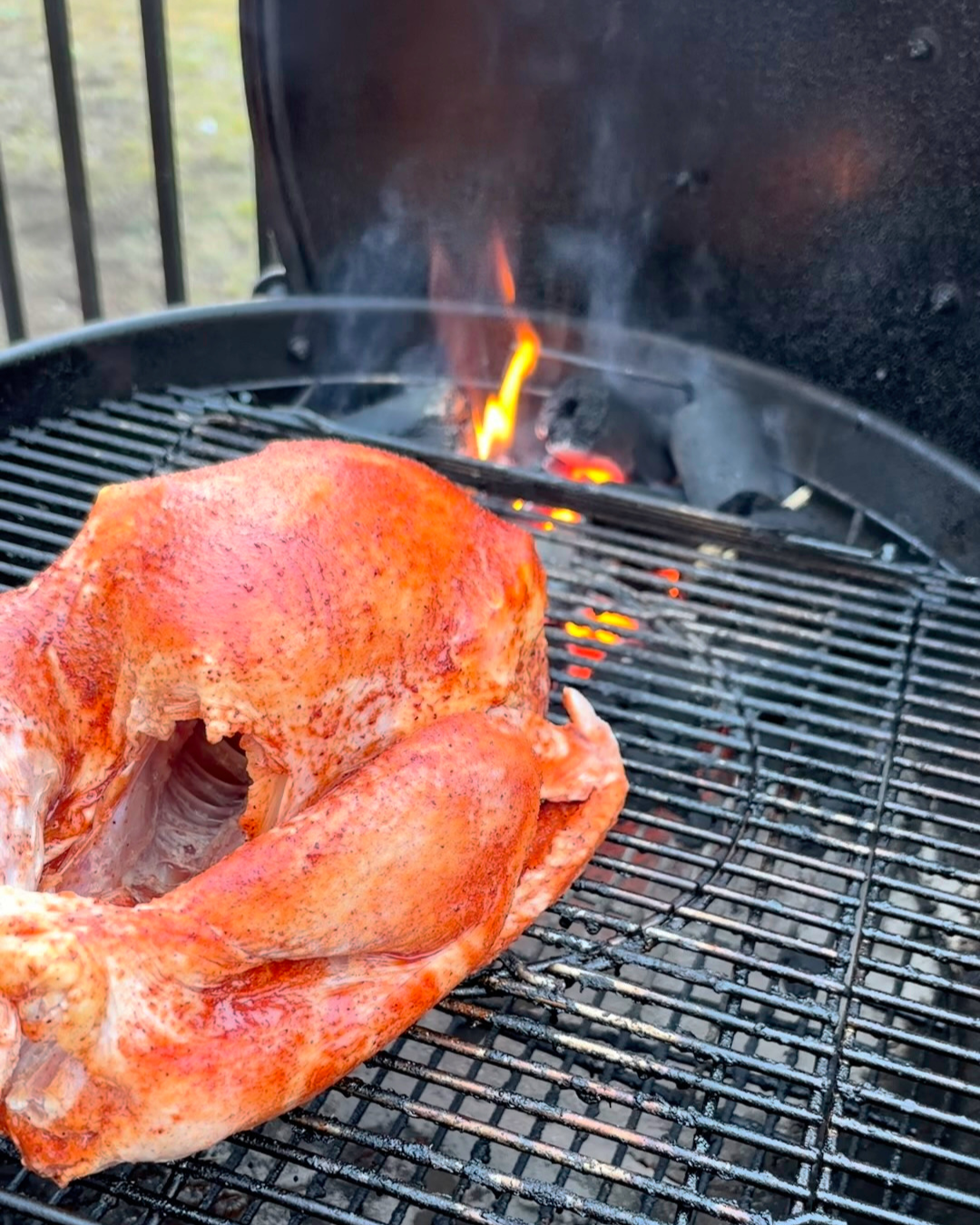
Once the bird is thawed, give it a few minutes of prep before you season or brine it.
Check both ends. The giblet pack and the neck are usually tucked inside, one in the main cavity and one up by the neck. Check both spots and pull everything out. Save them for gravy or stock, or toss them.
Pull the extras. Take out the pop-up timer if there is one. If the legs are held with a plastic or metal clamp, you can leave it on for a whole bird, but take it out if you're spatchcocking.
Trim it up. Cut off any big flaps of loose skin or chunks of fat around the cavity.
Don't rinse it. Rinsing just splashes raw turkey juice around your sink. Cooking takes care of it.
Pat it dry. Use paper towels inside and out. Dry skin takes the seasoning better and crisps up on the smoker.
Should You Brine a Turkey?
Brining seasons the meat all the way through and helps it hold onto moisture. Only brine a natural bird. Enhanced and kosher birds are already salted.
Dry brine. Rub kosher salt all over the bird, about 1 tablespoon for every 4 to 5 pounds. Leave it uncovered in the fridge for 24 to 48 hours. The meat gets seasoned and the skin dries out, which means crispier skin on the smoker.
Wet brine. Soak the bird in salt water for 12 to 24 hours in a refrigerator. It works, but it's messy, can leave the skin rubbery and lets be honest is painful as it takes up a ton of fridge space.
Plan your thaw around the brine. A brine only works on a fully thawed bird, so it adds 1 to 2 days to your timeline. Start thawing 1 to 2 days earlier than the schedule above. For a 10 to 12 lb bird and a Thursday cook, start thawing by Saturday, then salt it Tuesday morning.
Whole Turkey vs Spatchcock Turkey
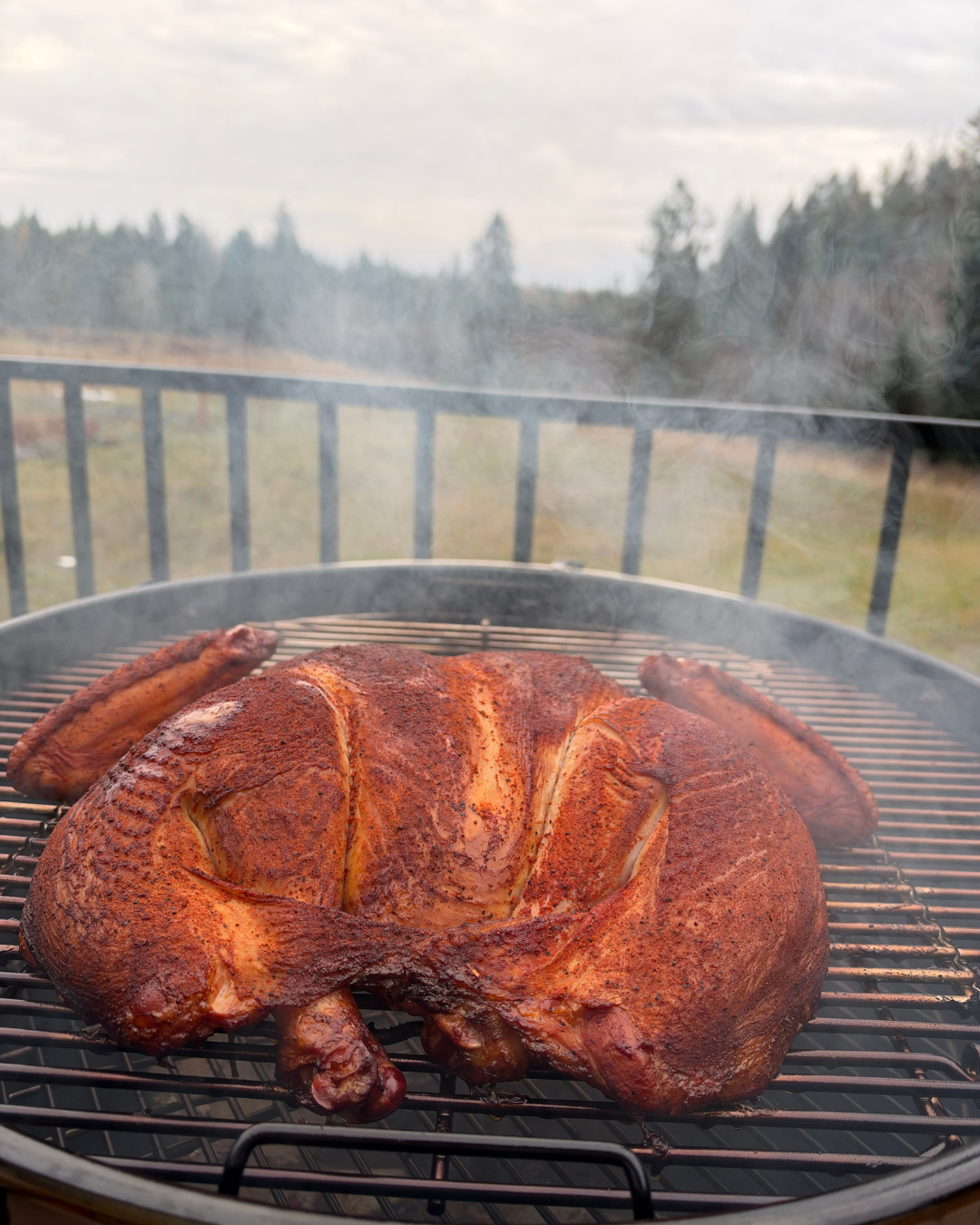
Spatchcocking means cutting out the backbone with heavy-duty shears and pressing the bird flat. It's the single biggest upgrade you can make to a turkey on the grill.
Spatchcock turkey can significantly shorten the cook and depending on temperature can cook in roughly half the time. Because the bird lies flat, the breast and thighs cook more evenly, and almost all of the skin faces the heat, so more of it gets crispy. The main trade-off is the look. You lose the classic whole-bird on the table.
Whole turkey is the one everyone pictures, and it looks great on the table. It takes longer, and the breast is more likely to overcook while you wait on the thighs.
We cooked both side by side, same size, same seasoning, same pit temp, to see how big the difference really is.
[PLACEHOLDER: Side by side results. Cook time for each bird, how the skin turned out, and which one we'd cook again.]
[PHOTO: Spatchcock and whole turkey side by side on the grill]
What Temp to Smoke a Turkey
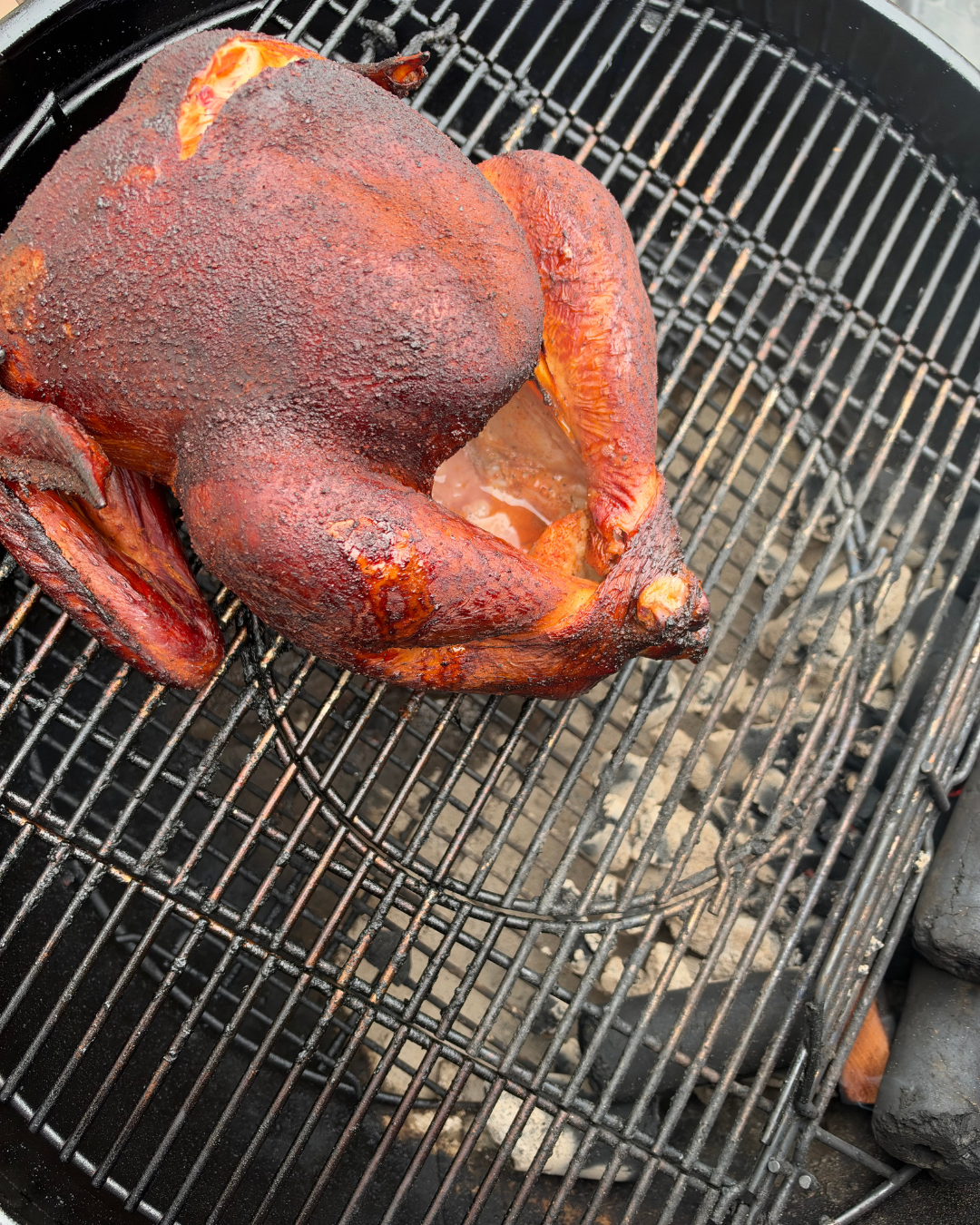
How hot you run the pit decides the skin. Here are the three ways to go, with rough times for a 10 to 12 lb bird.
Straight smoke (225 to 250°F). The most smoke flavor, but it takes a long time and the skin usually comes out rubbery. Spatchcock: about 3 to 4 hours. Whole: about 5 to 6 hours.
Hot smoke (300 to 325°F), our pick. Plenty of smoke, crispy skin, and a reasonable cook time. Spatchcock: about 1.5 to 2 hours. Whole: about 3 to 3.5 hours.
Oven (325°F). Same times as a hot smoke. It's a solid backup if the weather turns.
These times are a starting point. Every bird and every pit is different, so cook to temp, not the clock. Any grill that can hold 300 to 325°F works: a pellet grill, a kettle set up for two-zone cooking, a kamado, an offset, or a drum. For wood, go mild. Apple, cherry, or pecan won't overpower the bird.
What Temp Is Turkey Done At?
White meat and dark meat finish at different temps, so you're checking two spots.
Breast: Pull at 160°F. Probe the thickest part of the breast, sliding in from the side and staying off the bone. It'll likely climb to the safe 165°F while it rests. If you pull it at 165°F and it'll most likely be dry by the time you carve.
Thighs: 175 to 180°F. Dark meat has more connective tissue and needs more heat to get tender. Probe the thickest part of the thigh, near where it meets the body, without touching bone. This tends to be a texture preference, and isn’t a safety concern.
Check both sides of the bird. One side almost always runs hotter than the other. If the breast is ready before the thighs, tent just the breast with a piece of foil and let the dark meat catch up.
How to Rest and Carve a Turkey
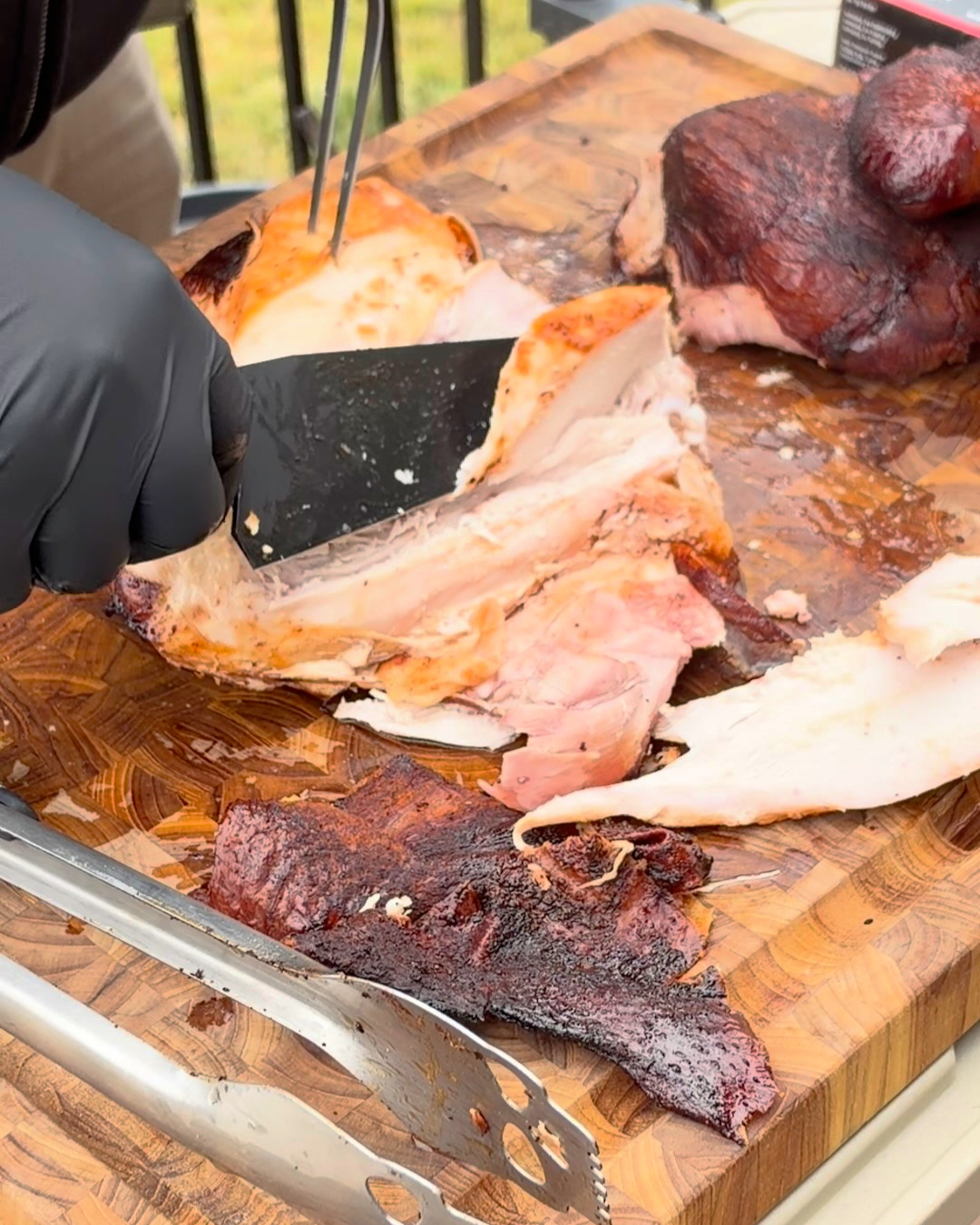
Rest the bird for 30 to 45 minutes under loose foil. It'll stay plenty hot, and the juices settle back into the meat instead of running all over your cutting board.
To carve, skip slicing thin pieces off the whole bird at the table. Do this instead:
Pull the legs and thighs off at the joint.
Cut each breast off the bone in one whole piece.
Slice the breast across the grain into thick slices.
Separate the drumsticks from the thighs and slice the thigh meat off the bone.
Every slice gets some skin, and it's way easier to serve.
FAQ
How long does it take to smoke a turkey? At 300 to 325°F, plan on about 1.5 to 2 hours for a spatchcocked 10 to 12 lb bird and 3 to 3.5 hours for a whole one. Cook to temp, not the clock.
What size turkey should I buy? About 1.5 pounds per person. For a big crowd, two 10 to 12 lb birds beat one giant bird.
Should I brine an injected turkey? No. Enhanced, basted, and kosher birds are already salted. Brining them makes them way too salty.
Can I stuff a smoked turkey? Cook the stuffing separately. Stuffing inside the bird slows the cook down and has to hit 165°F itself, and by the time it does, the breast is overcooked.
Is spatchcocking worth it? For the grill, yes. It cooks faster and more evenly, and you get more crispy skin.
