

Pork Ribs 101: Baby Backs vs Spare Ribs, Temps, and How to Cook Them
Baby backs, Spares, and St. Louis cut, broken down. Where they come from, what to buy, and how to tell when they’re done.

Ribs might be the most social thing you can put on a smoker. Throw a couple of racks on and people find a reason to stop by.
I cook a lot of spare ribs. I came up cooking in restaurants, and spares are what we ran, so that's where my habits started. I typically buy mine at Costco. Nothing fancy about that choice. It's the best price I've found, they come three racks to a pack and when you're feeding a crew, price and quantity matters.
If you've ever stood at the meat case wondering what separates baby backs from spares, or what temp ribs are actually done at, start here.
TL;DR
Pork ribs come in three main cuts. Baby backs come from the top of the rib cage near the spine, so they're smaller, curved, and lean. Spare ribs come from the lower rib cage along the belly, so they're bigger, flatter, and fattier. St. Louis cut is a spare rib trimmed into a clean rectangle. Smoke them at 225 to 275°F until they hit about 195 to 203°F internal, then confirm with the bend test. Plan on roughly 3.5 to 6 hours depending on the cut and your pit temp.
Pork Rib Recipes
Already know your ribs and just want to cook? Jump straight to a recipe. Every rib recipe we publish lands in this list, so check back as it grows:
Coming soon:
Smoked Baby Back Ribs
How to Trim Spare Ribs St. Louis-Style
Hot and Fast Ribs
Party Ribs
Baby Backs vs Spare Ribs vs St. Louis Cut
All pork ribs come off the same rib cage. Where on the cage they're cut is what makes them different.
Baby back ribs come from the top of the rib cage, where the ribs meet the spine, right under the loin. That's why they're curved, shorter, and leaner. They cook faster and they're the easiest rack to find in most stores.
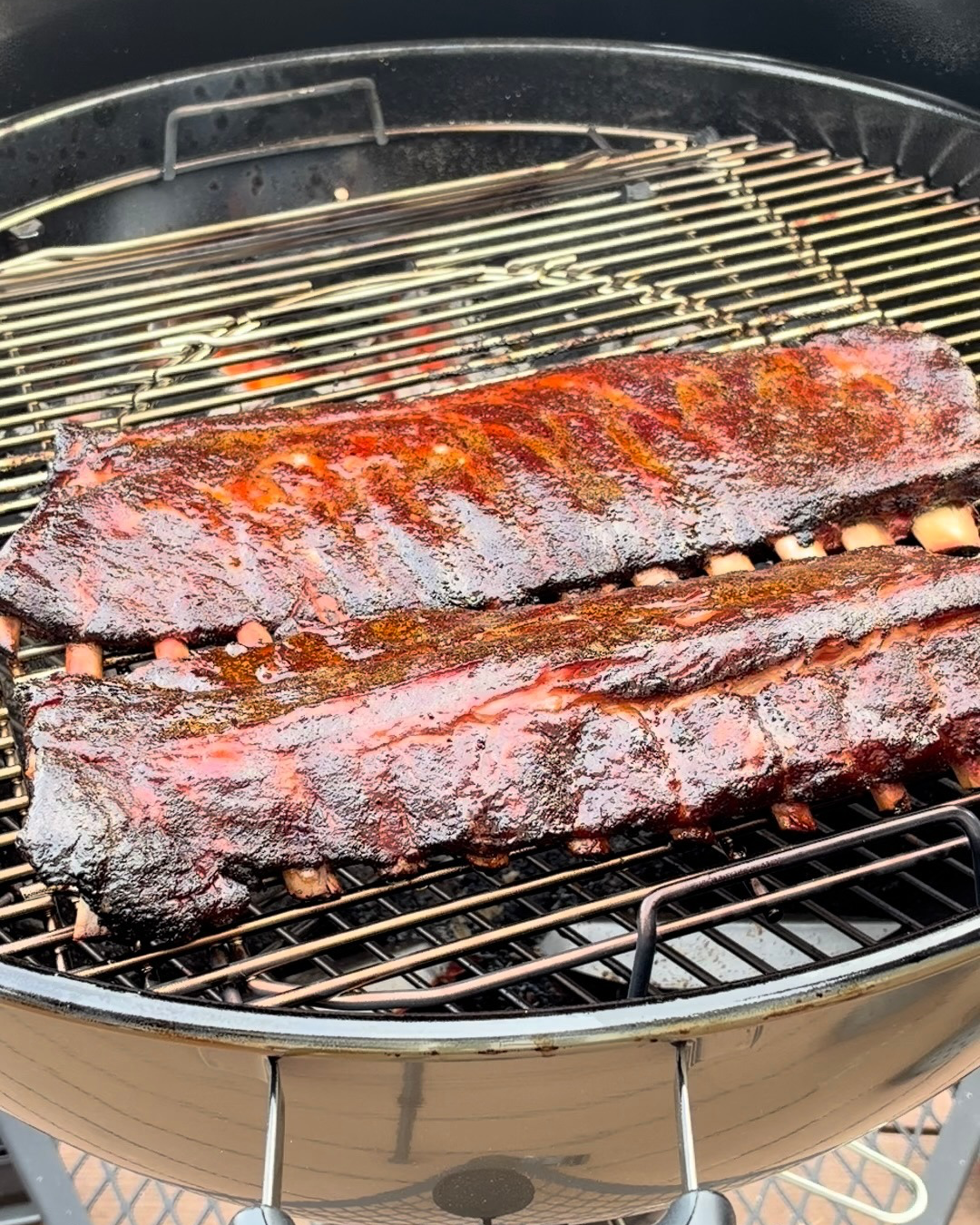
Spare ribs come from the lower part of the rib cage, down along the belly. They're longer, flatter, and carry a lot more fat and connective tissue. That extra fat renders down over a long cook and adds flavor. A full spare rack still has the rib tips (the cartilage heavy strip where the ribs meet the breastbone) and a flap of meat on the bone side, so it cooks a little uneven unless you trim it.
St. Louis cut ribs are spare ribs with the rib tips and flap trimmed off. What's left is a clean, even rectangle that cooks evenly and looks good on a board. You can buy them already trimmed or do it yourself and save the tips for snacking.
Quick Comparison
Baby backs: Top of the rib cage near the spine. 1.5 to 2.5 lbs per rack, lean, and done in 3.5 to 5 hours at 225 to 275°F. Best for a quicker cook and a leaner bite.
Spare ribs: Lower rib cage along the belly. 2.5 to 4 lbs per rack, fatty, and done in 5 to 6 hours. Best for max flavor and feeding a crowd.
St. Louis cut: A spare rack trimmed square. 2 to 3.5 lbs per rack, fatty, and done in 5 to 6 hours. Best for even cooking and a clean presentation.
How to Buy Ribs
You don't need a specialty butcher for good ribs. I buy mine at Costco because the price per pound is hard to beat, and the quality is consistent. Wherever you shop, here's what to look for:
Even meat coverage. Look for meat across the top of the bones, not bones poking through. Exposed bones are called "shiners," and they mean the butcher cut too close.
Even thickness. A rack that's thick on one end and thin on the other will cook unevenly.
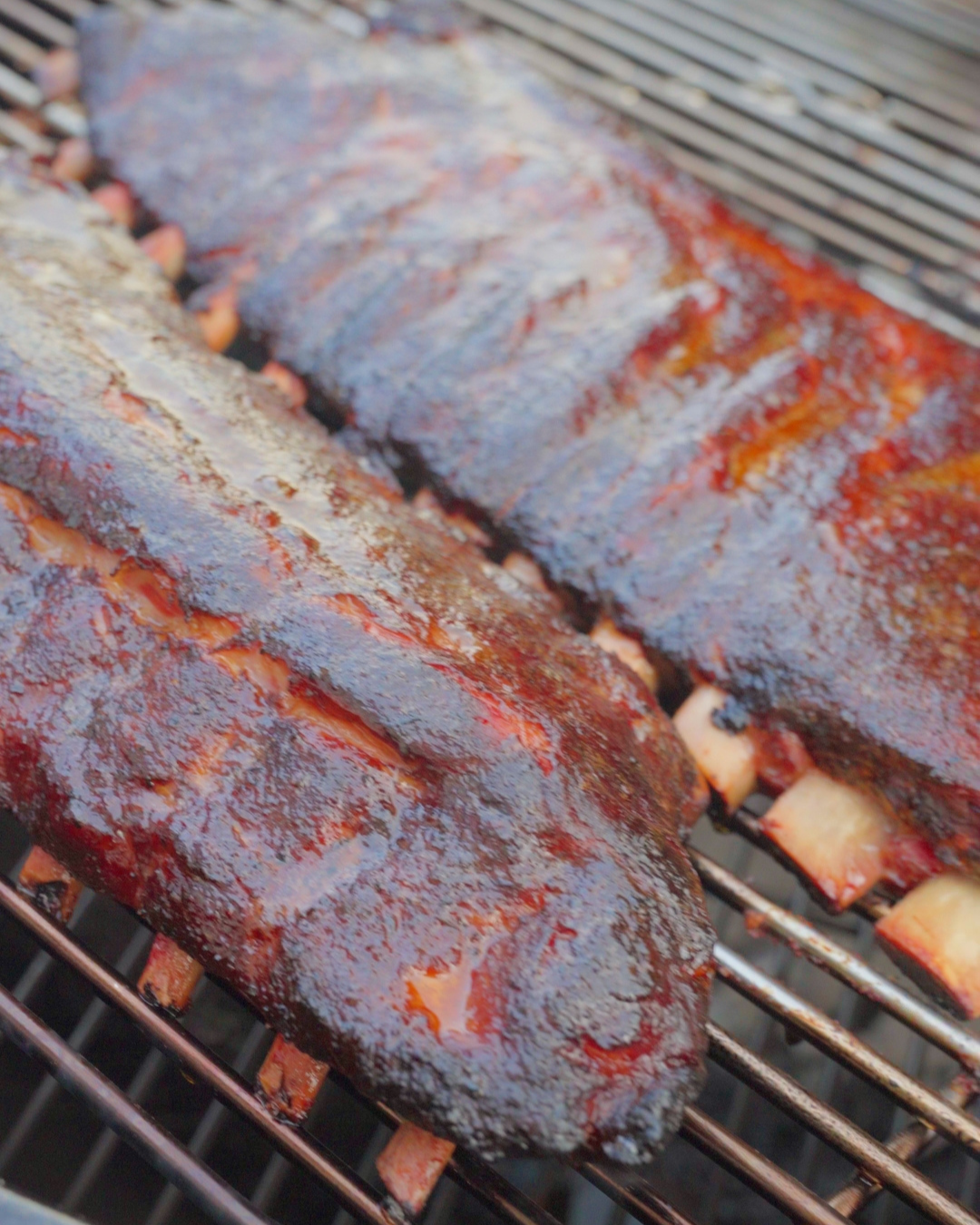
Good marbling. Little streaks of fat through the meat render down on a long cook and keep things juicy.
Check the label for a solution. Some ribs are "enhanced" with a saltwater solution. They'll likely taste salty and a little hammy once you add a rub. Look for plain pork with no added solution. If enhanced is all you can find, go light on the salt in your rub.
How many to buy: Plan on one rack for every 2 to 3 people, whatever the cut. If it's a hungry crew, round up. Leftover ribs are never a problem.
Skip the "country-style ribs." Despite the name, they aren't actually ribs. They're cut from the blade end of the pork loin, up near the shoulder, and a lot of what's sold today comes straight from the shoulder itself. Instead of a rack of rib bones, you get thick, meaty strips that are either boneless or have a chunk of shoulder blade bone in them. They're a solid cut, but they cook and eat like pork shoulder, not ribs. There's no rack to bend test, no bones to slice between, and no rib bite. If you want ribs, grab baby backs, spares, or St. Louis.
How to Prep Ribs
Prep is quick. Trimming and seasoning are the real work, and the membrane is up to you.
Pull the membrane (optional). There's a thin, silvery skin on the bone side of the rack. Slide a butter knife under it at one end, grab it with a paper towel, and peel it off. Pulling it gives you a slightly more tender bite and lets the rub reach the bone side. If you're cooking a big batch or holding ribs hot for a long time, leave it on. It helps hold the rack together.
CHECK OUT THIS VIDEO OF US PULLING THE MEMBRANE OFF SOME RIBS!
Trim. Cut off any loose flaps or hard chunks of fat. For spares, this is where you'd square them up St. Louis-style if you want to.
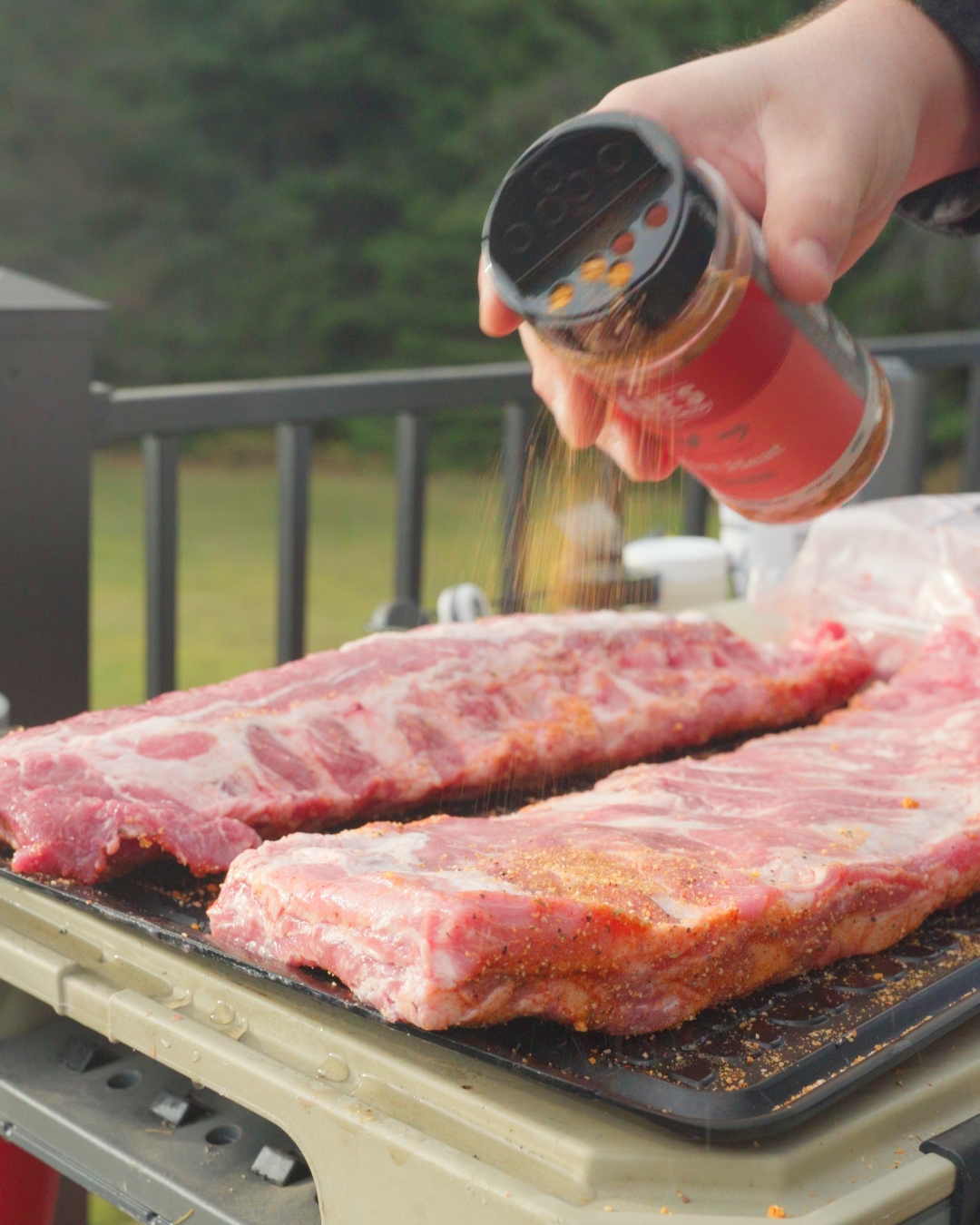
Season. Use a thin binder like mustard or oil if you like, then hit both sides with your rub. Give it time to sit while the smoker comes up to temp.
The full prep and rub details live in the recipe posts.
What Temp Are Ribs Done At?
Ribs are done around 195 to 203°F internal. That's well past "safe" for pork (145°F), but ribs are full of connective tissue, and it takes that much heat and time for it to break down into something tender.
The catch is that ribs are thin and full of bones, so one probe reading can lie to you. I use two checks together:
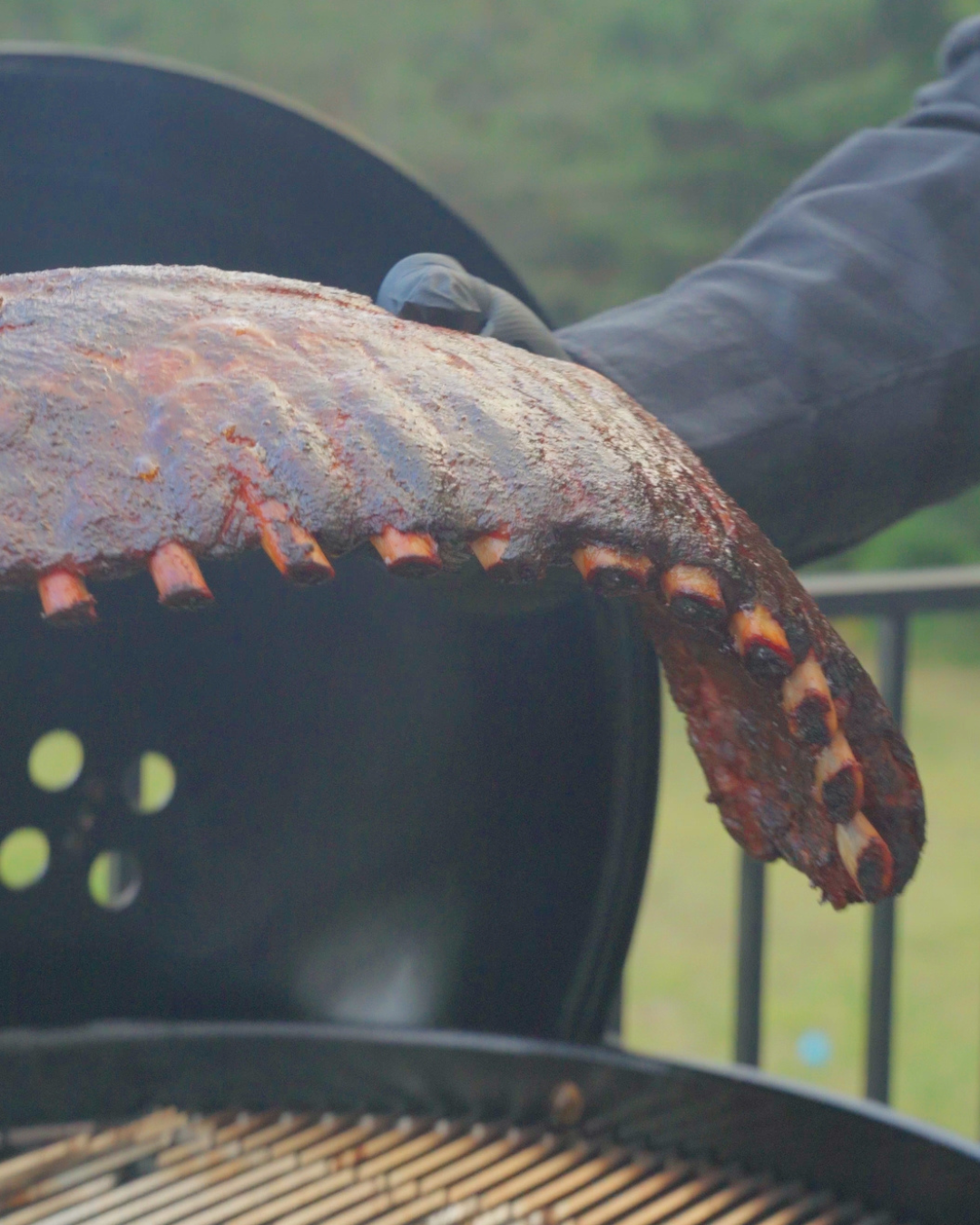
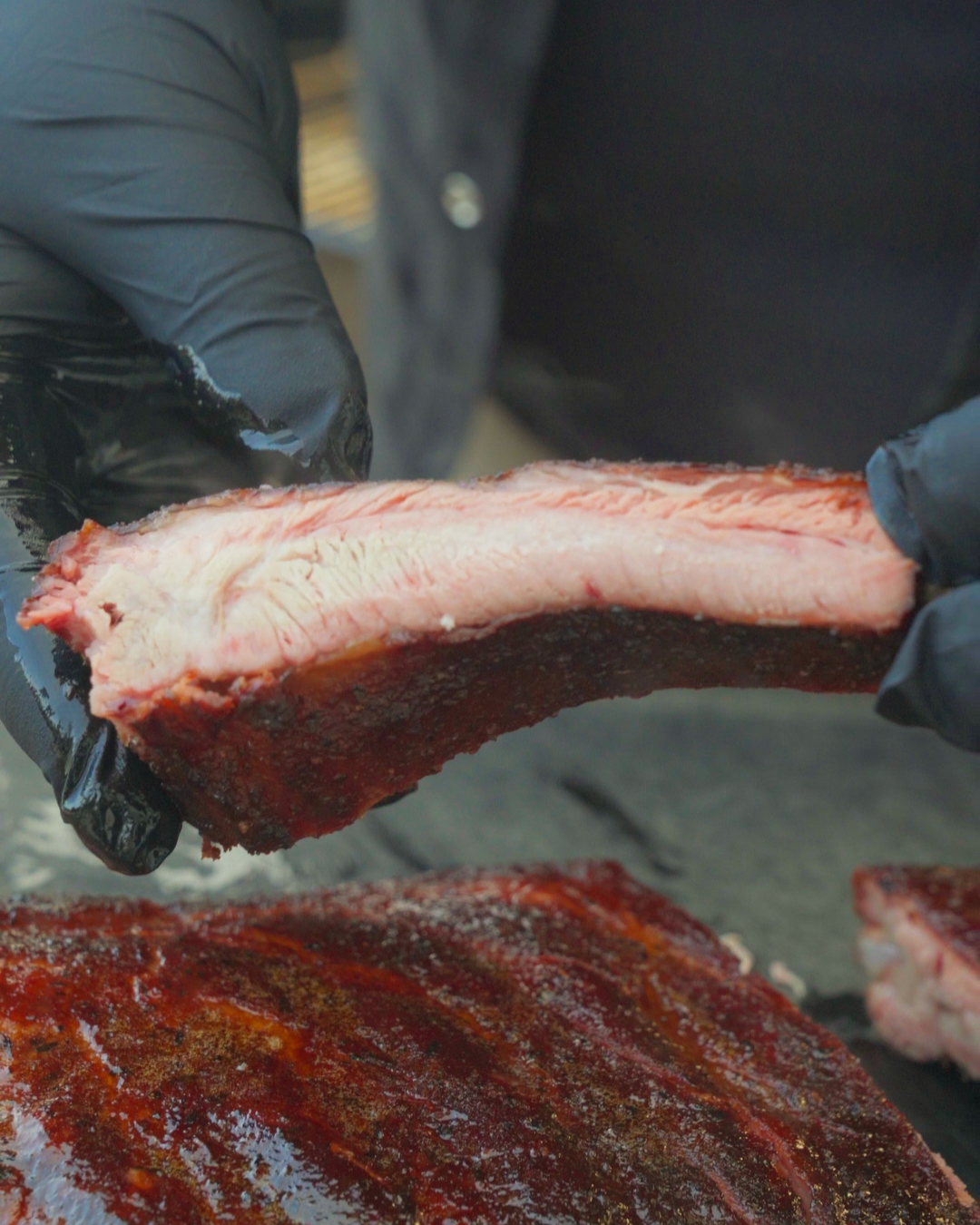
The bend test. Pick up the rack with tongs about a third of the way in from one end. If it bends easily and the bark starts to crack on top, you're there. If it stays stiff, give it more time. Our Dead Grip Tongs are built for exactly this move.
The probe. Slide a probe between the bones in a few spots. It should go in with almost no resistance, like pushing into soft butter. If you hit tension anywhere, keep cooking. If the ribs are thick enough to get a solid temp you're shooting for 195-203 degrees.
When both checks agree, pull them, rest them for 10 minutes, then flip them bone side up so you can see exactly where to slice between the bones.
Ways to Cook Ribs
There's more than one right way to cook ribs. These are the main ones, and each will get its own recipe post.
3-1-1 (our go-to for spares). Smoke at 225 to 275°F for 3 hours, wrap for 1 hour, then unwrap for the last hour to firm up the bark. Baby backs usually need less time on the front end. Full recipe coming soon.
Unwrapped, low and slow. No foil, no paper. Just smoke and time. It takes longer but builds the heaviest bark.
Hot and fast. Run the smoker at 300°F or a little higher and cut the cook time down. Great when you start late.
Heads up on the 3-2-1 method. You'll see 3-2-1 all over the internet. It was built for spares at 225°F and it's a solid starting point, but a 2-hour wrap can push ribs past tender and into mushy. We like to run a shorter 1-hour wrap to keep some bite.
FAQ
Which is better, baby backs or spare ribs? Neither is better; they're just different. Baby backs are leaner and often cook faster. Spares carry more fat, which renders into flavor over a long cook. Baby backs get you to dinner sooner. Spares are a little more forgiving, since the extra fat keeps them from drying out on a long cook.
Do you have to remove the membrane on ribs? Nope, it's optional. Pulling it gives you a slightly more tender bite and better rub coverage. For party ribs or anything you're holding hot for a long time, leave it on. It helps keep the rack from falling apart.
How long does it take to smoke ribs? At 225 to 275°F, plan on about 3.5 to 5 hours for baby backs and 5 to 6 hours for spares. Cook to doneness, not the clock.
What's the difference between spare ribs and St. Louis ribs? St. Louis ribs are spare ribs with the rib tips and flap trimmed off. Same meat, cleaner shape, more even cooking.
How many ribs per person? Plan on one rack for every 2 to 3 adults, no matter the cut.
